Key takeaways
- • Sunrise (gates open 30 minutes before sunrise) offers the softest light, coolest temperatures, and the thinnest crowds at the Taj Mahal.
- • October to March is the best season, with average daytime temperatures of roughly 8-33°C across the season, mildest from November to February, and mostly clear skies outside the December-January fog window.
- • Night viewing runs only 5 nights a month around the full moon, from 8:30 PM to 12:30 AM, and is never offered on Fridays or during Ramzan.
- • Foreigners pay ₹1,300 (₹1,100 entry + ₹200 mausoleum) for daytime visits and ₹750 for night viewing; the Taj Mahal is closed to visitors every Friday.
- • Book night-viewing tickets as soon as travel dates are confirmed, since only 400 tickets are sold per night in batches of 50.
The best time to visit the Taj Mahal is at sunrise between October and March, when light is soft, temperatures are cool, and skies are clearest outside the December-January fog window. This guide breaks down sunrise versus sunset, the best months, and exactly how early to book night viewing.
What Is the Best Time of Day to Visit the Taj Mahal?
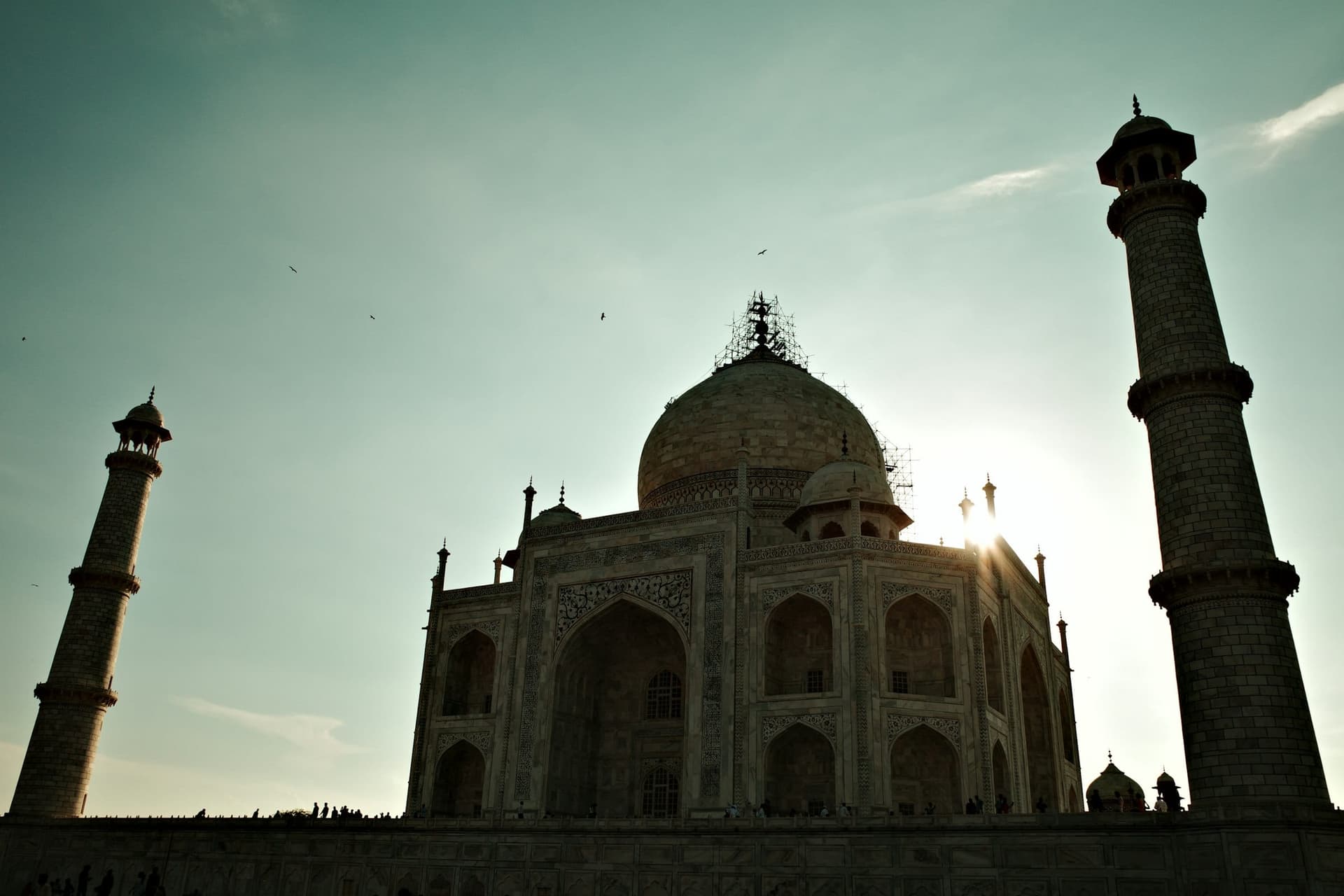
The best time of day to visit the Taj Mahal is at sunrise. Gates open 30 minutes before sunrise, and the marble takes on soft pink and gold tones as the light changes, with far fewer visitors than at any other hour.
Arriving for the first entry slot also beats the heat for most of the year and gives photographers the clearest, haze-free light before the day's dust and humidity build up. The three-hour visit limit from time of entry means an early start also leaves more time inside before you are asked to leave.
Sunset is the second-best option and suits travellers who cannot manage an early start. Crowds are heavier because day-trippers from Delhi and tour groups converge in the late afternoon, and the light, while still attractive, is softer and less dramatic than sunrise.
| Factor | Sunrise | Sunset |
|---|---|---|
| Light quality | Soft pink and gold on the marble | Warmer, hazier tones |
| Crowd levels | Lowest of the day | Heaviest, especially in peak season |
| Temperature | Coolest hours of the day | Still warm in summer months |
| Best for | Photography, quiet viewing | Travellers who cannot start early |
What Are the Best Months to Visit the Taj Mahal?
October to March is the best season to visit the Taj Mahal. Daytime temperatures average roughly 8-33°C across the season, mildest from November to February, skies are mostly clear, and humidity is low compared with the rest of the year.
Within that window, December and January carry a fog caveat. Early morning fog is common in Agra during these two months and can delay sunrise or obscure the monument for the first hour or more after gates open.
| Month | Avg Temp (°C) | Conditions | Crowd Level | Good Time to Visit? |
|---|---|---|---|---|
| January | 8-21 | Morning fog common | High (New Year period) | Good after 10 AM |
| February | 11-25 | Clear, sunny | High | Excellent |
| March | 16-32 | Warming, clear skies | Moderate | Excellent (early month) |
| April | 22-38 | Hot, dry | Low | Fair, mornings only |
| May | 26-42 | Very hot, dry | Low | Poor |
| June | 28-40 | Hot, pre-monsoon humidity | Low | Poor |
| July | 27-34 | Monsoon rain begins | Low | Fair |
| August | 26-33 | Monsoon, humid | Low | Fair |
| September | 24-34 | Monsoon tapering off | Moderate | Good |
| October | 18-33 | Clear, cooling | Moderate | Excellent |
| November | 12-28 | Clear, cool evenings | High | Excellent |
| December | 7-22 | Morning fog common | High (holiday season) | Good after 10 AM |
Should You Avoid Summer or Monsoon Season?
April to September is generally the season to avoid unless you specifically want thin crowds. April through June is the hottest period, with daytime highs regularly above 40°C, making midday sightseeing uncomfortable. July to September brings the monsoon, with heavy rain, high humidity, and hazier skies that reduce visibility for photography.
Crowds follow the same seasonal pattern as the weather. October to March, especially December, is peak season, with the largest crowds arriving between 9 AM and 1 PM as day-trip groups from Delhi arrive by road or by the Gatimaan Express. The first entry slot at sunrise and the last hour before sunset stay noticeably quieter even in peak months.
April to September is the off-season and the quietest time to visit, though the trade-off is extreme heat from April to June and monsoon haze from July to September. Travellers prioritising smaller crowds over comfort and photographic clarity may still prefer these months.
How Far in Advance Should You Book Night Viewing?
Book Taj Mahal night-viewing tickets as soon as your travel dates are confirmed, ideally the moment the monthly schedule opens. The Archaeological Survey of India releases only 5 night-viewing dates a month, clustered around the full moon, and sells a maximum of 400 tickets per night in batches of 50 every 30 minutes between 8:30 PM and 12:30 AM.
Night viewing is never offered on Fridays and is suspended entirely during Ramzan. Tickets can be bought at the ASI office, 22 Mall Road, Agra, or online at asi.paygov.org.in; foreigners pay ₹750 and Indian nationals ₹510. Because each night is capped, book well before arriving in Agra rather than waiting until you reach the city, especially around full-moon weekends and Indian holidays when batches sell out fastest.
What Are the Taj Mahal's Opening Hours?
The Taj Mahal opens 30 minutes before sunrise and closes 30 minutes before sunset every day except Friday. Friday closure applies to all visitors except local Muslims attending prayers at the mosque within the complex.
Every ticket allows a maximum stay of three hours from the time you enter, so plan your visit, not just your entry time, around this limit.
How Should You Time a Day Trip from Delhi?
Most international visitors combine the Taj Mahal with a day trip from Delhi, and timing that journey affects your visit window. The Gatimaan Express (train 12050) leaves Hazrat Nizamuddin station at 8:10 AM and reaches Agra Cantt at 9:50 AM, arriving too late for sunrise but in good time for a mid-morning visit; it does not run on Fridays. By car, the 230-240 km drive via the Yamuna Expressway takes 3-4 hours, so an overnight stay in Agra is the only reliable way to catch sunrise at the Taj Mahal.
Frequently asked questions
What is the single best month to visit the Taj Mahal?
February is generally the best single month to visit the Taj Mahal. Skies are clear, daytime temperatures average 11-25°C, the December-January fog has usually cleared, and the peak Christmas-New Year crowds have thinned out. October and March are close runners-up, offering similarly pleasant weather, though March grows warmer toward its end.
Is sunrise or sunset better for Taj Mahal photography?
Sunrise is better for photography at the Taj Mahal. The marble reflects pink and gold light as the sun rises, the air is clearer before the day's dust builds up, and the first entry slot has far fewer visitors than sunset, when day-trip groups and tour buses converge. Tripods and monopods are not allowed inside the complex, so plan handheld shots.
Does fog affect Taj Mahal visits in winter?
Yes, morning fog is common in Agra during December and January and can obscure or delay sunrise views of the Taj Mahal. It typically clears by mid-to-late morning, so a foggy sunrise does not usually ruin a full-day visit. Travellers visiting specifically for sunrise photography in these two months should build in flexibility for a second attempt if possible.
How many nights a month does Taj Mahal night viewing run?
Taj Mahal night viewing runs on only 5 nights a month, scheduled around the full moon, and is never offered on Fridays. Viewing takes place in 30-minute batches between 8:30 PM and 12:30 AM, with a maximum of 50 visitors per batch and 400 per night. The programme is also suspended entirely during Ramzan, so check the monthly schedule before planning around it.
How much does a Taj Mahal night-viewing ticket cost?
A Taj Mahal night-viewing ticket costs ₹750 for foreign nationals and ₹510 for Indian nationals. Tickets are sold at the ASI office, 22 Mall Road, Agra, or online through asi.paygov.org.in. Because only 400 tickets are released per night across 5 nights a month, book as soon as your travel dates are confirmed, especially for full-moon weekends and Indian public holidays.
Why is the Taj Mahal closed on Fridays?
The Taj Mahal closes to general visitors every Friday so the mosque within the complex can be used for weekly prayers by local Muslims. All other visitors, including day-trippers and photography tour groups, cannot enter on Fridays. The Gatimaan Express, the fastest train link from Delhi, also does not run on Fridays, so this is not a practical day for a Delhi-Agra Taj Mahal day trip.
How early should you arrive for Taj Mahal sunrise entry?
Arrive at the ticket counter or gate at least 30-45 minutes before the official opening time, which is itself 30 minutes before sunrise. Early arrival secures a place near the front of the queue at the East or West Gate, giving you clear access to the main viewing points before crowds build. Each ticket allows a maximum three-hour stay from the time you enter.
Can you visit the Taj Mahal in one day from Delhi?
Yes, a Taj Mahal day trip from Delhi is possible but works best by starting very early. The Gatimaan Express departs Hazrat Nizamuddin at 8:10 AM and reaches Agra Cantt at 9:50 AM, returning at 5:50 PM. By car via the Yamuna Expressway, the 230-240 km journey takes 3-4 hours each way, so leaving Delhi before dawn is essential to see sunrise at the monument.