 Full-Day Tour
1 day
Delhi Full Day City Tour
Mughal monuments, colonial Delhi and street food, all in a single private-guided day.
Delhi
- Private guide included
- Private car & driver
- Monument tickets included
Free itinerary & quote · reply in about 15 minutes
Agra · Private travel
National Capital Territory, India
Mughal forts, colonial avenues, and the gateway to your Golden Triangle trip
Based in
Agra, India
Reply time
About 15 minutes
Deposit
Balance on arrival
Plan your Delhi visit: top attractions like Red Fort and Humayun's Tomb, best months to go, and how to reach Agra by Gatimaan Express or road.
Delhi is India's capital and the usual starting point for the Golden Triangle circuit, layering over 1,000 years of history from the Qutub Minar's 12th-century minaret to the Lotus Temple's 1986 marble petals. Most international flights into North India land here, at Indira Gandhi International Airport, making Delhi the default first or last stop for a Delhi-Agra-Jaipur itinerary.
The city divides into two distinct halves. Old Delhi, built by Shah Jahan as his capital in the 1600s, holds the Red Fort, Jama Masjid, and the crowded lanes of Chandni Chowk market. New Delhi, laid out by the British in the early 1900s, holds India Gate, the government quarter, and wide tree-lined avenues — a sharp contrast in scale and pace within a single day's sightseeing.
For a first-time visitor deciding how much time to give Delhi, two things matter: three of its monuments are UNESCO World Heritage Sites in their own right (Red Fort, Humayun's Tomb, Qutub Minar), and it sits within easy reach of Agra by the Gatimaan Express or the Yamuna Expressway. A one- or two-day stay in Delhi before heading to the Taj Mahal is the standard, efficient way to combine both cities without doubling back.
Updated
Tours
Full-Day TourMughal monuments, colonial Delhi and street food, all in a single private-guided day.
Delhi
 Sunrise Taj Mahal
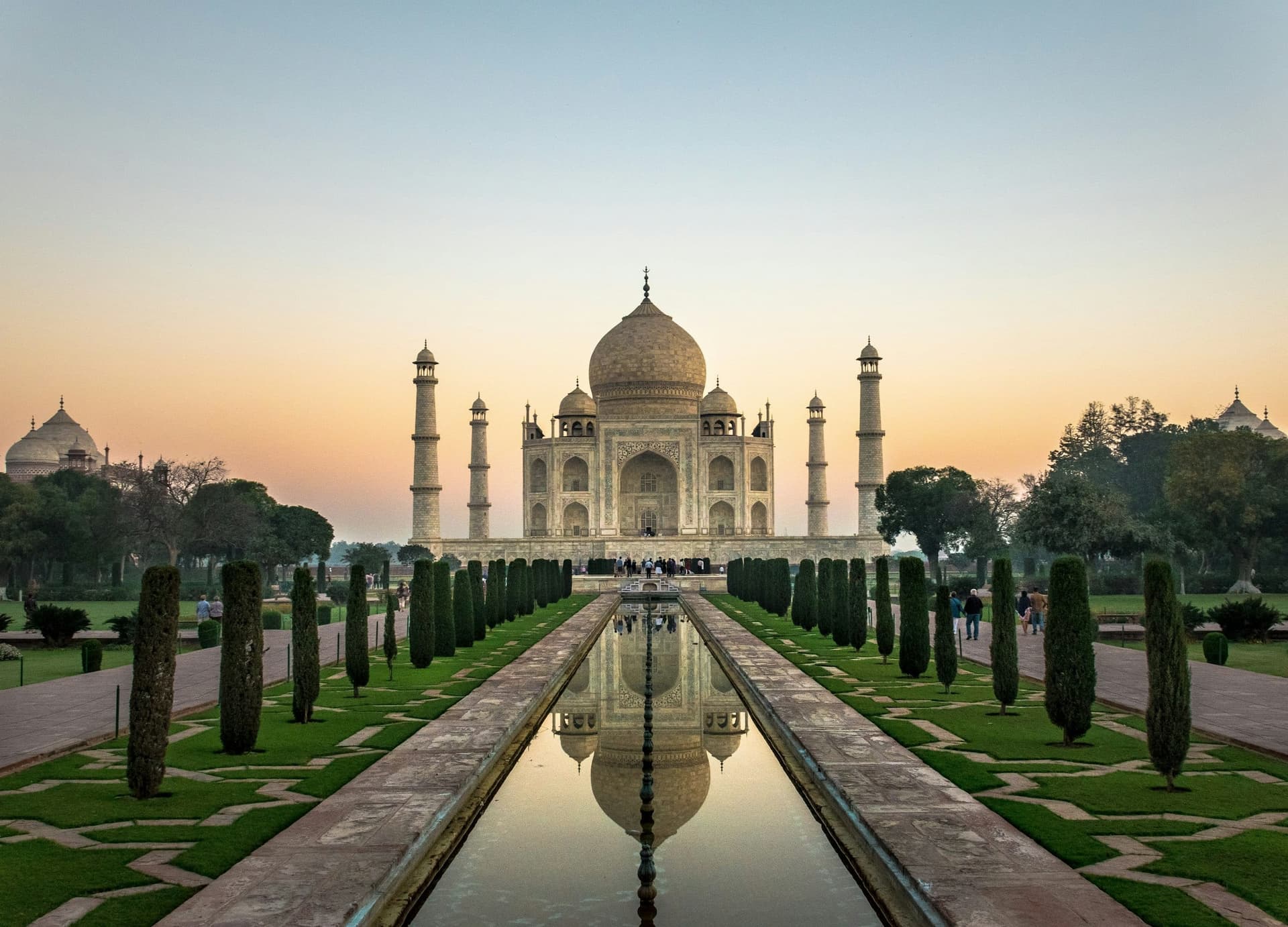
Delhi, Agra and Jaipur in 4 days, with a sunrise entry to the Taj Mahal included.
Delhi · Agra · Jaipur
 Sunrise
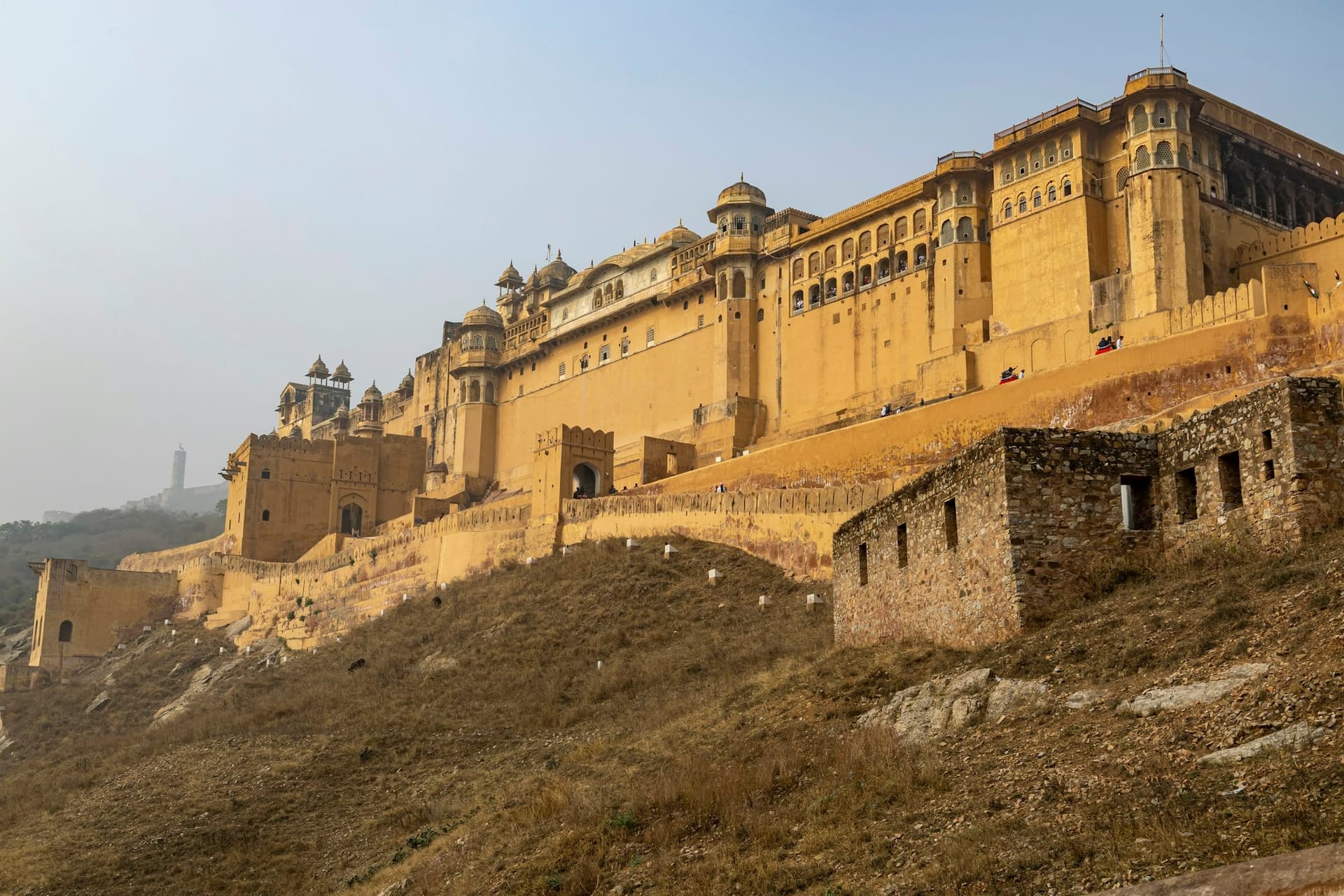
 at the Taj Mahal, two tiger safaris in Ranthambore, and Jaipur forts in between.
Delhi · Agra · Jaipur
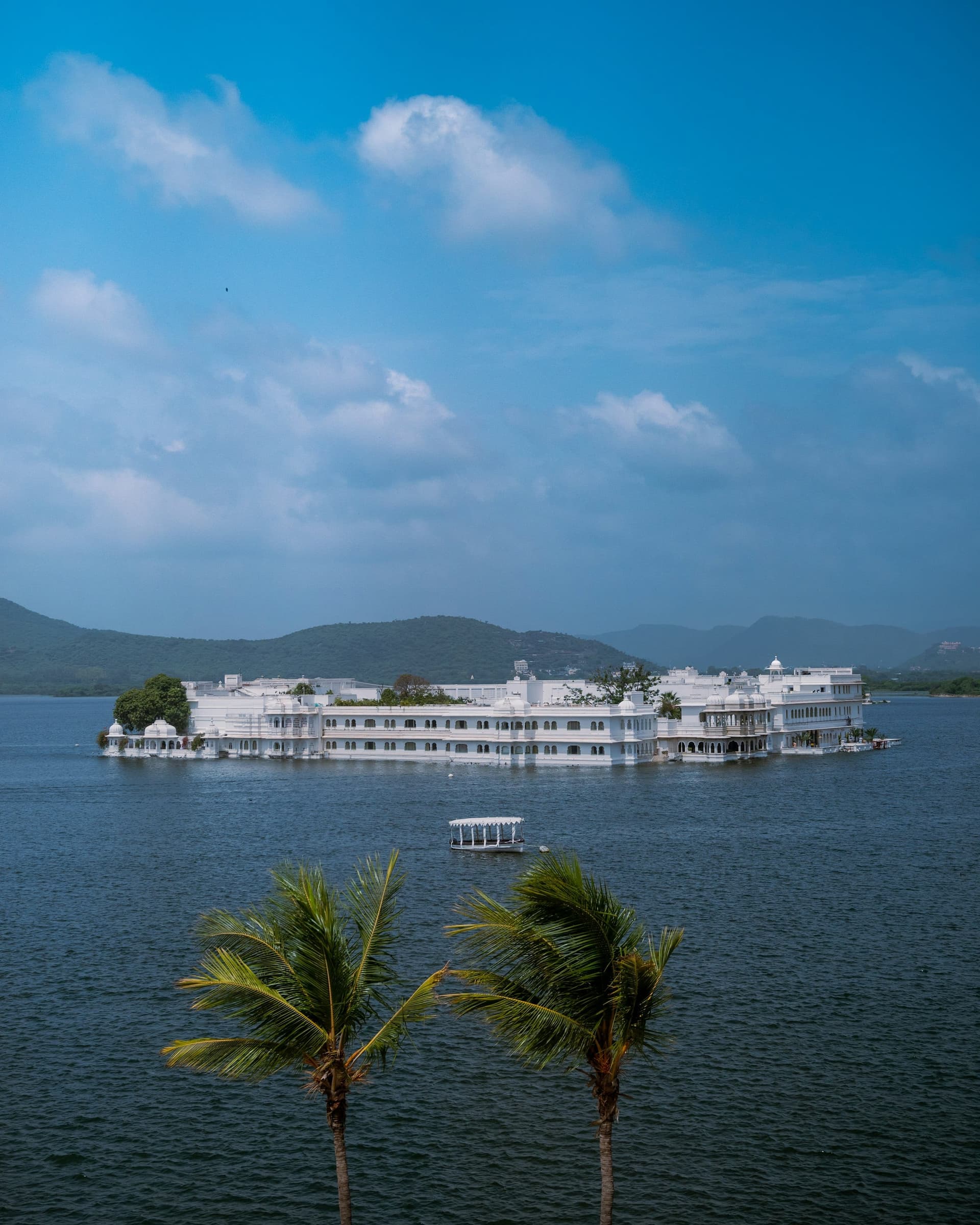 Sunrise Taj Mahal
Delhi, Agra, Jaipur and Udaipur in one week, ending with a Lake Pichola sunset cruise.
Delhi · Agra · Jaipur · Udaipur
Top experiences
Red Fort (Lal Qila)
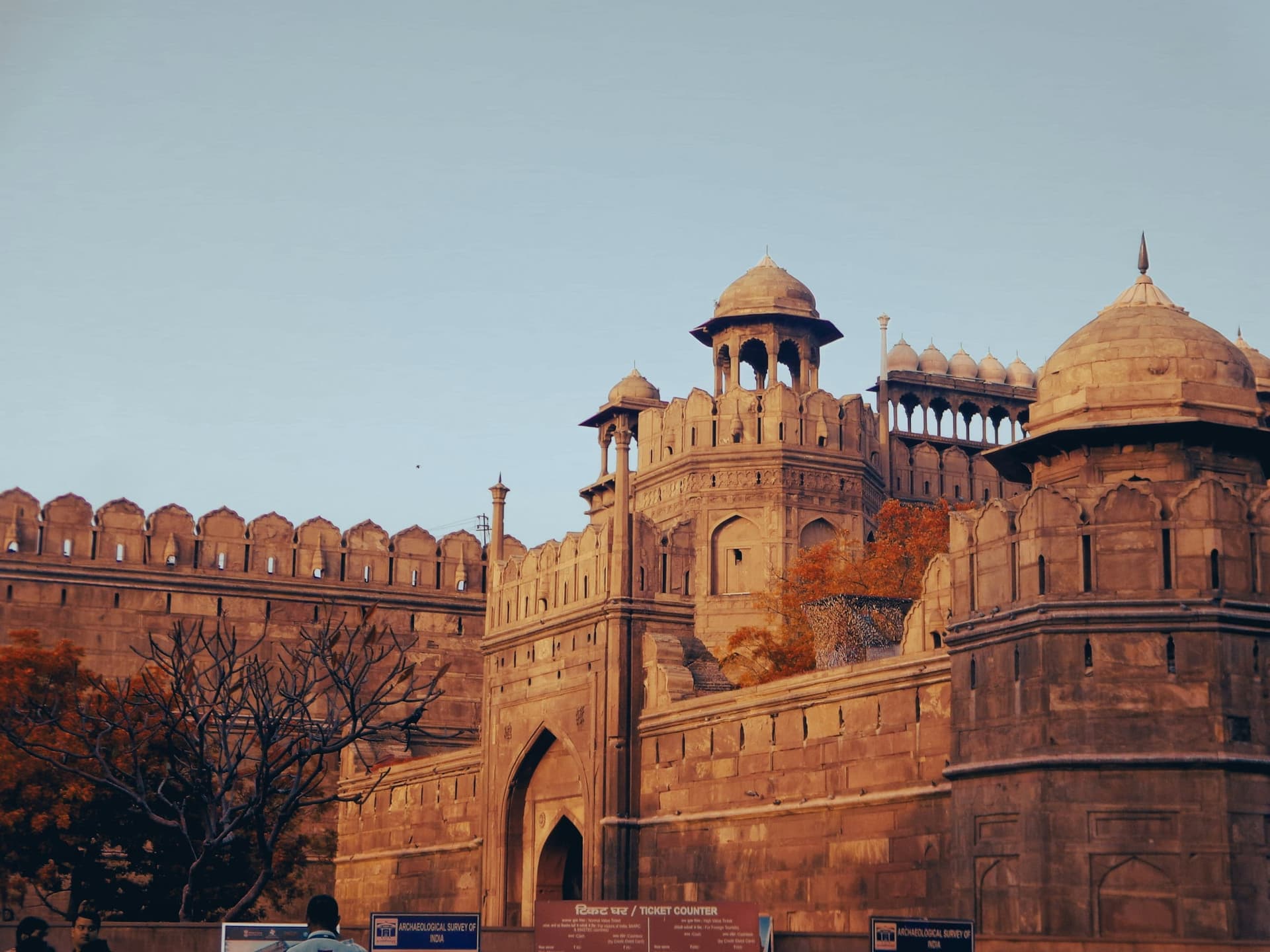
This red sandstone fortress was the seat of Mughal power for nearly 200 years after Shah Jahan made it his capital in 1648. It is a UNESCO World Heritage Site and the venue for India's Prime Minister to address the nation every Independence Day, 15 August.
9:30 AM-4:30 PM, closed Mondays · ₹550 foreigner / ₹35 Indian
Tip: Enter through Lahori Gate and walk the Chatta Chowk covered bazaar first, before the halls fill with tour groups after 11 AM.
Humayun's Tomb
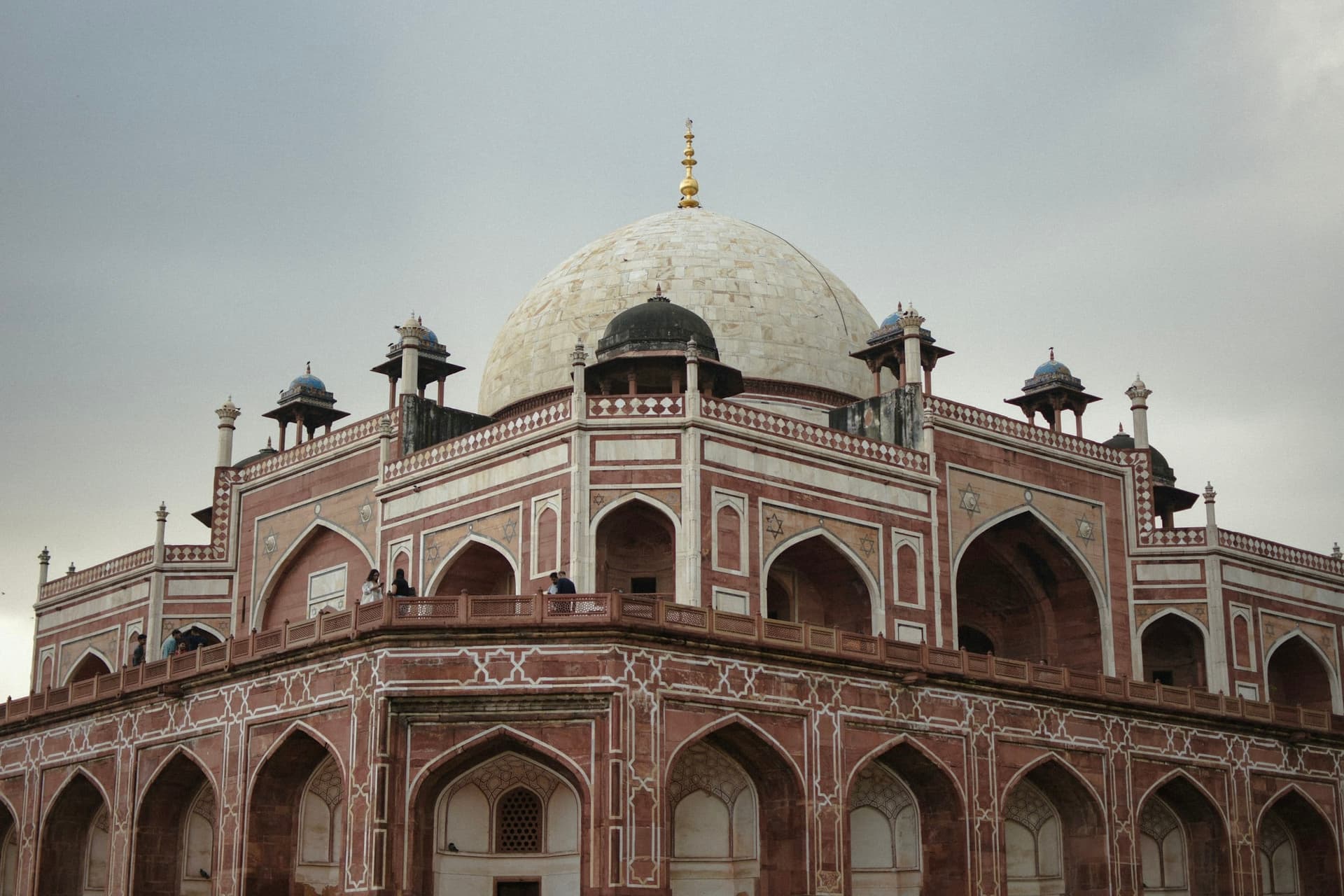
Built in 1570 for Mughal emperor Humayun, this garden tomb was the architectural blueprint for the Taj Mahal, sharing its charbagh layout and red sandstone-and-marble design. It was Delhi's first UNESCO World Heritage Site, listed in 1993.
6:00 AM-6:00 PM daily · ₹550 foreigner / ₹35 Indian
Tip: Visit an hour before sunset for soft light on the dome with far fewer visitors than midday.
Qutub Minar
At 73 metres, this 12th-century minaret is the tallest brick minaret in the world and marks the start of Islamic rule in Delhi under Qutb-ud-din Aibak. The surrounding complex includes the Iron Pillar, which has resisted rusting for over 1,600 years.
Sunrise to sunset daily · ₹550 foreigner / ₹35 Indian
Tip: The complex gets crowded on weekends; a weekday morning visit gives clearer photos of the minaret's carved bands.
India Gate
This 42-metre war memorial commemorates around 84,000 Indian soldiers who died in World War I and the Third Anglo-Afghan War. It sits at the eastern end of Rajpath, Delhi's ceremonial boulevard, and is free to visit at any hour.
Open 24 hours; lit from 7:00 PM-10:00 PM · Free
Tip: Come after sunset when the monument is floodlit and vendors sell snacks on the surrounding lawns.
Chandni Chowk and Jama Masjid
Chandni Chowk is Old Delhi's 17th-century market, laid out by Shah Jahan's daughter Jahanara, and remains one of India's busiest wholesale bazaars. Jama Masjid, completed in 1656, stands at its centre as India's largest mosque, with a courtyard holding 25,000 worshippers.
Market 10:00 AM-8:00 PM; mosque open outside prayer times · Market free; mosque free, camera fee applies
Tip: Book a cycle-rickshaw or walking food tour rather than driving in; the lanes are too narrow and congested for cars.
Lotus Temple
Completed in 1986, this Bahá'í House of Worship is shaped like a lotus flower from 27 free-standing marble petals. It welcomes visitors of every faith for silent prayer or meditation and has no set service or sermon.
9:00 AM-5:30 PM (Oct-Mar) / 9:00 AM-7:00 PM (Apr-Sep), closed Mondays · Free
Tip: Arrive right at opening time to see the building and gardens before tour buses arrive around mid-morning.
Akshardham Temple
Opened in 2005, this modern Hindu temple complex covers 100 acres and is built from pink sandstone and Italian marble without structural steel. Bags, cameras and phones must be left at a free cloakroom outside.
10:00 AM-6:30 PM, closed Mondays · Main complex free; boat ride and exhibitions ₹170-400
Tip: Security screening is thorough and no photography is allowed inside, so plan for a phone-free couple of hours.
Practical
The best time to visit Delhi is October to March, when daytime temperatures stay between 15°C and 30°C and outdoor sightseeing is comfortable. This window also lines up with the Golden Triangle circuit, since Agra and Jaipur share the same cool, dry season.
April to June brings peak heat, with temperatures regularly crossing 40°C and dust storms possible in May. July to September is the monsoon, with humid air and heavy but generally short downpours; sightseeing is still possible between showers.
| Months | Weather | Recommendation |
|---|---|---|
| Dec-Jan | Cool, 5-20°C, occasional fog | Best for walking tours; pack a light jacket for mornings |
| Feb-Mar | Mild, 12-28°C | Comfortable and less crowded than December |
| Apr-Jun | Hot, up to 45°C | Sightsee early morning or evening only |
| Jul-Sep | Monsoon, humid, 25-35°C | Carry rain protection; some outdoor sites reduce hours |
| Oct-Nov | Cool, 10-30°C | Peak season; book hotels and Gatimaan Express seats ahead |
Practical
Most international visitors arrive in Delhi by air, through Indira Gandhi International Airport (DEL), which connects directly to major hubs in the US, UK, Canada, Australia, Europe, and the Middle East. The airport sits about 16 km from central Delhi, roughly 30-45 minutes by prepaid taxi or Delhi Metro Airport Express Line.
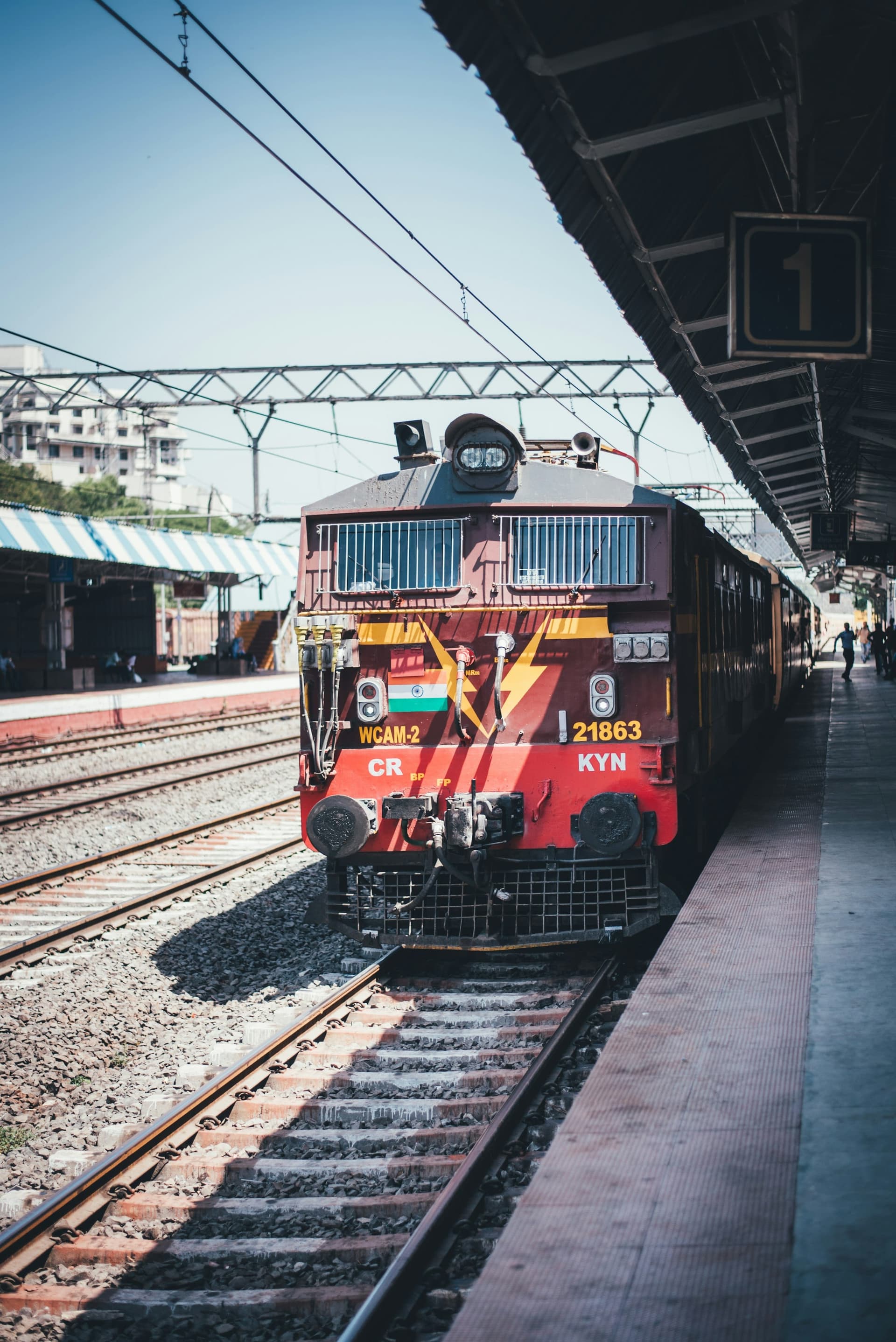
From Delhi, Agra is the natural next stop on the Golden Triangle route. The Gatimaan Express (trains 12050/12049) is the fastest option, running Hazrat Nizamuddin to Agra Cantt in 1 hour 40 minutes, departing 8:10 AM and returning 5:50 PM; it does not run on Fridays.
By road, Agra is 230-240 km from Delhi via the Yamuna Expressway, a 3-4 hour drive that also allows stops en route. Hiring a car with driver is common for same-day Taj Mahal tours that start early from Delhi hotels.
The Delhi Metro is the fastest way to cover long distances across the city and reaches most major sights directly. For shorter hops or areas like Old Delhi's narrow lanes, auto-rickshaws or app-based cabs work better than the metro.
| Route | Mode | Approx. time |
|---|---|---|
| DEL Airport to Connaught Place | Metro Airport Express + interchange | 35-45 min |
| Delhi to Agra | Gatimaan Express | 1h 40m |
| Delhi to Agra | Car via Yamuna Expressway | 3-4 hours |
| Delhi to Jaipur | Car via NH48 | 5-6 hours |
Guides
 practical
The Gatimaan Express is fastest at 1h40m, a private car takes 3-4 hours door to door, and regular trains cost less but take longer to reach Agra.
Updated 3 September 2026
 practical
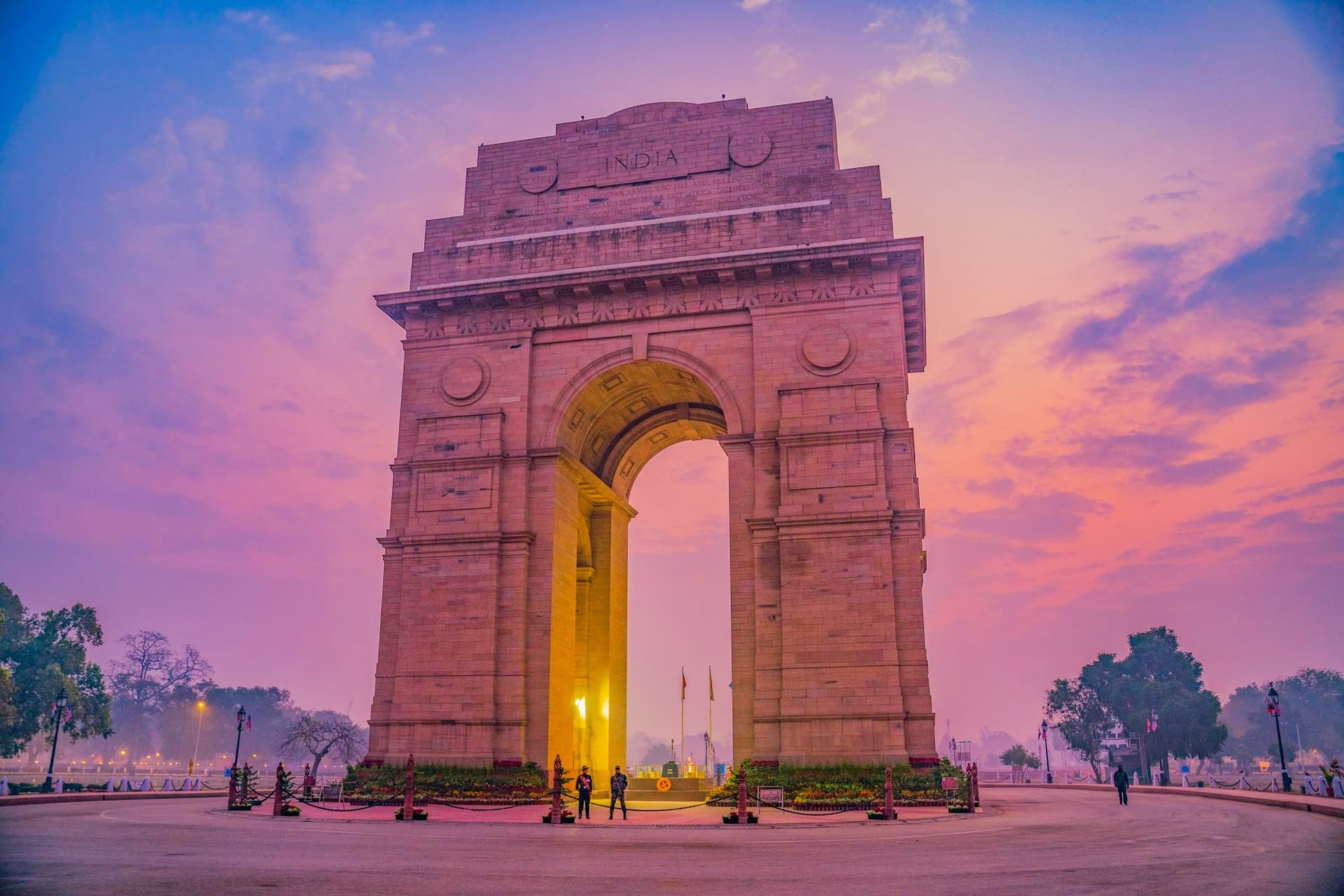
The India e-Tourist Visa gives US, UK, Canada and Australia travellers 30 days from $25, applied for only at indianvisaonline.gov.in — beware look-alike sites.
Updated 3 September 2026
FAQ
Two full days cover Delhi's main sights comfortably: one day for Old Delhi (Red Fort, Chandni Chowk, Jama Masjid) and one for New Delhi (India Gate, Humayun's Tomb, Qutub Minar, Lotus Temple or Akshardham). One day works if you only want the highlights before moving on to Agra.
Yes. Delhi has three UNESCO World Heritage Sites of its own — Red Fort, Humayun's Tomb, and Qutub Minar — plus the international airport most travellers land at anyway. Pairing a day or two in Delhi with a same-day or overnight Agra trip is the standard Golden Triangle start.
The Gatimaan Express train covers the roughly 200 km from Hazrat Nizamuddin to Agra Cantt in 1 hour 40 minutes, departing 8:10 AM and returning 5:50 PM (no Friday service). By car, the Yamuna Expressway covers the 230-240 km distance in 3-4 hours, offering more flexibility on timing and stops.
Indira Gandhi International Airport (DEL) handles almost all international arrivals into North India. It has three terminals; most long-haul international flights use Terminal 3, which connects to central Delhi by metro, prepaid taxi, or airport express train in 20-45 minutes depending on traffic.
Delhi is generally safe for visitors who take standard precautions: use registered taxis or the metro rather than unlicensed cabs, avoid isolated areas after dark, and agree on fares before rickshaw rides. Old Delhi's crowded lanes warrant extra vigilance for pickpocketing, as in any dense market area worldwide.
Most Western nationalities can apply for an e-Tourist Visa online at indianvisaonline.gov.in, with 30-day validity starting from $25. Apply at least a few days before travel, since approval typically takes 3-5 business days, and only use the official government portal to avoid third-party fees.
Cover shoulders and knees at religious sites such as Jama Masjid, Lotus Temple, and Akshardham; robes are sometimes available to borrow at mosque entrances. Shoes come off before entering prayer halls, so slip-on footwear makes repeated temple visits easier through the day.
Agra works well as a day trip from Delhi using the Gatimaan Express or an early car departure via the Yamuna Expressway, both allowing a full day at the Taj Mahal and Agra Fort before returning that evening. Doing Delhi as a day trip from Agra is less common, since Delhi's sights are more spread out.
Your dates, our town
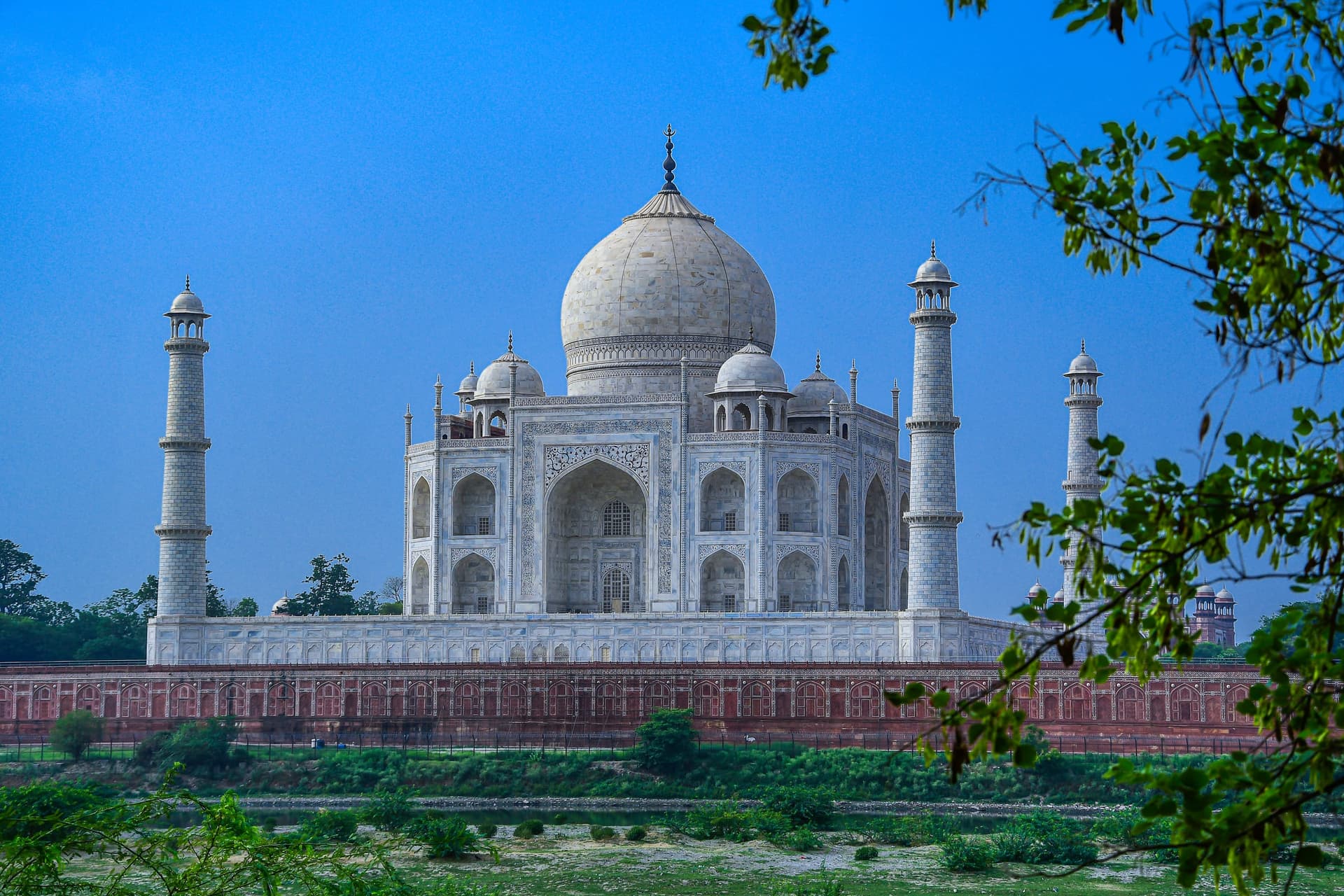
A real person in Agra replies on WhatsApp, usually in about 15 minutes. Free cancellation up to 48 hours before most tours; the balance is paid on arrival.