Key takeaways
- • Phones and handheld cameras (DSLR or mirrorless, without a tripod) are allowed throughout the Taj Mahal complex, except inside the mausoleum itself.
- • Tripods, monopods, drones, and video cameras are banned across the entire complex, with no exceptions at the security checkpoint.
- • No photography of any kind, including phone photos, is permitted inside the main mausoleum chamber.
- • Professional or commercial shoots — weddings, film crews, lighting rigs — need Archaeological Survey of India permission arranged at least 15 days in advance.
- • Entry costs ₹1,300 for foreign visitors (₹1,100 ticket plus ₹200 mausoleum add-on) and includes standard handheld photography at no extra charge.
- • Night viewing follows the same camera rules and runs on five nights a month around the full moon, excluding Fridays and Ramzan, from 8:30 PM to 12:30 AM.
Can You Bring a Camera Into the Taj Mahal?
Yes, handheld cameras and phones are allowed inside the Taj Mahal complex, but tripods, monopods, drones, and video cameras are not. Security staff check all bags at the east and west gates before entry, and banned items are turned away at that point rather than confiscated for later return. There is no cloakroom at the ticket counters for surrendered gear, so visitors carrying banned equipment need to leave it at a hotel or vehicle beforehand. Standard DSLR and mirrorless cameras, used handheld without extra accessories, pass through security without issue.
What Camera Gear Is Banned at the Taj Mahal?
Four categories of equipment are banned throughout the Taj Mahal complex: tripods, monopods, drones, and video cameras. Tripods and monopods are barred because they slow foot traffic on the marble platform and around the reflecting pools, where crowds move continuously during peak hours. Drones fall under national monument-security and aviation rules that cover every Archaeological Survey of India (ASI) protected site, not just the Taj Mahal. Dedicated video cameras, or camcorders, are also banned complex-wide, regardless of whether the visitor is a tourist or working on a personal project.
| Equipment | Allowed at the Taj Mahal? | Notes |
|---|---|---|
| Smartphone | Yes | Photos allowed complex-wide; not inside the mausoleum |
| Handheld DSLR or mirrorless camera | Yes | No tripod, monopod, or attached lighting |
| Point-and-shoot camera | Yes | Same handheld rules apply |
| Tripod or monopod | No | Turned away at the security check |
| Drone | No | Banned under ASI monument-security rules |
| Video camera or camcorder | No | Not permitted anywhere in the complex |
| Professional lighting or reflectors | No | Requires prior ASI permission for a commercial shoot |
Can You Take Photos Inside the Mausoleum?
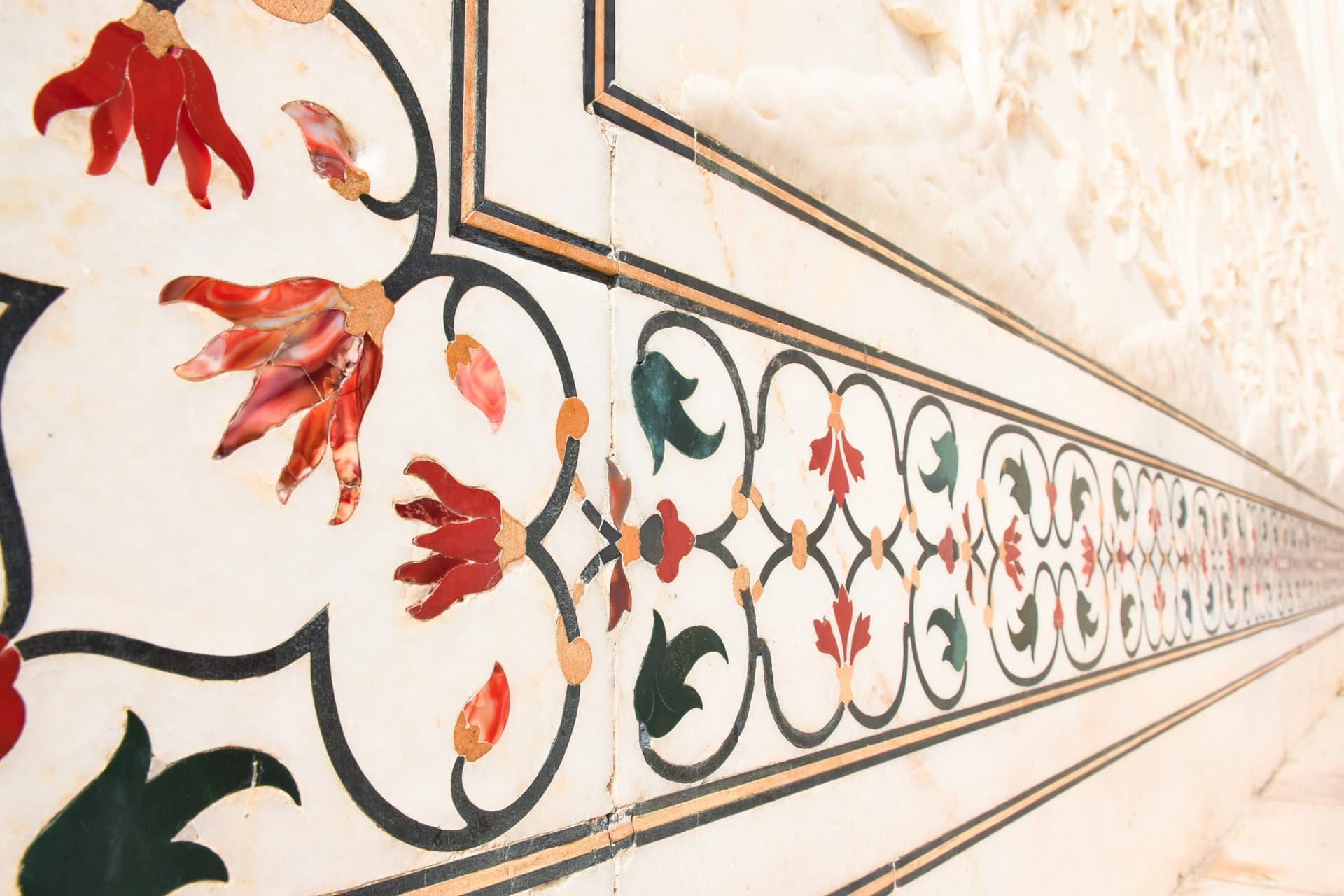
No, photography of any kind is banned inside the main mausoleum, the marble chamber holding the cenotaphs of Shah Jahan and Mumtaz Mahal. This rule applies to phones and handheld cameras alike, not just professional equipment. Staff inside the chamber ask visitors to put cameras and phones away before entering through the arched doorway. The rule protects the marble inlay work and keeps the line of visitors moving through the narrow interior space, which stays busy throughout the day.
How Do Professional Photographers Get Permission to Shoot at the Taj Mahal?
Commercial and professional photography at the Taj Mahal requires written permission from the Archaeological Survey of India, arranged at least 15 days before the planned shoot date. This applies to any shoot involving tripods, lighting equipment, drones, film crews, or paid commercial work such as wedding photography, fashion shoots, or documentary filming. Applications are handled through the ASI's Agra Circle office and typically need to specify the shoot date, equipment list, and purpose. Casual tourist photography with a handheld camera or phone does not need this process — it only applies to equipment or activity that falls outside the standard visitor rules.
What Happens If You Bring Banned Equipment?
Security staff stop tripods, monopods, drones, and video cameras before they reach the ticket barrier, so visitors are turned back rather than allowed to check the item in. There is no left-luggage counter at the gates for cameras or tripods, so the practical fix is leaving that gear at the hotel or in a vehicle before arriving. Drones are treated as a security matter rather than just a photography rule, and flying one near the complex can lead to confiscation and police involvement under India's monument-protection regulations.
What About Camera Rules During Night Viewing?
Night viewing follows the same camera rules as the daytime visit: handheld cameras and phones are fine, tripods and video cameras are not. Night viewing runs on five nights a month around the full moon, excluding Fridays and the month of Ramzan, in 30-minute batches from 8:30 PM to 12:30 AM, capped at 400 visitors a night. Because tripods are banned and the interior stays dark, most visitors rely on a phone's low-light mode or a camera's handheld high-ISO settings rather than long exposures. Night viewing tickets cost ₹750 for foreign visitors and ₹510 for Indian nationals, booked separately from the daytime ticket at the ASI office on Mall Road or through asi.paygov.org.in.
Tips for Getting Good Photos Within the Rules
- Shoot during the first hour after opening, 30 minutes before sunrise, when soft light and thinner crowds suit handheld photography.
- Brace the camera against a railing or use built-in image stabilisation instead of a banned tripod for steadier low-light shots.
- Save wide establishing shots for the Great Gate and the garden paths, where there is more room to compose without blocking foot traffic.
- Keep any video clips short and handheld, since dedicated video cameras are banned complex-wide.
- Book night viewing in advance for a full-moon shot, since only 400 visitors are admitted per night in 30-minute batches.
Frequently asked questions
Are tripods allowed at the Taj Mahal?
No. Tripods and monopods are banned throughout the Taj Mahal complex, along with drones and video cameras. Security staff enforce this at the east and west entrance gates, where bags are checked before ticket validation. Visitors carrying a tripod are asked to leave it outside, typically at a hotel or vehicle, since there is no storage counter at the gates. Handheld cameras and phones remain permitted everywhere except inside the mausoleum.
Can you use a phone camera inside the Taj Mahal?
Yes, phones can be used for photography throughout the Taj Mahal complex, including the gardens, the Great Gate, and the marble platform. The one exception is inside the main mausoleum chamber, where all photography is banned regardless of device. Outside that chamber, phone photos and standard handheld camera shots are unrestricted, and no extra camera fee applies beyond the standard entry ticket.
Are drones allowed at the Taj Mahal?
No. Drones are banned at the Taj Mahal and at all Archaeological Survey of India-protected monuments, under national monument-security and aviation rules. Flying one near the complex, even from outside the walls, risks confiscation and involvement of security or police. There is no permit for recreational drone use at the site; only specific, pre-approved professional shoots may include aerial equipment under separate ASI authorisation.
How far in advance do you need ASI permission for a professional photo shoot?
Professional and commercial photography, including tripods, lighting rigs, film crews, or paid shoots such as weddings, needs Archaeological Survey of India permission arranged at least 15 days before the shoot date. Applications typically go through the ASI's Agra Circle office and specify the date, equipment, and purpose of the shoot. Casual tourist photography with a handheld phone or camera does not require this process.
Can you take photos inside the Taj Mahal mausoleum?
No, photography is not permitted inside the main mausoleum, the domed chamber holding the cenotaphs of Shah Jahan and Mumtaz Mahal. This ban covers phones as well as cameras, and staff inside the chamber ask visitors to put devices away before entering. The rule protects the marble inlay and helps manage the continuous line of visitors moving through the narrow interior space.
Is video recording allowed at the Taj Mahal?
Dedicated video cameras and camcorders are banned throughout the Taj Mahal complex, the same as tripods and drones. This sits alongside the general rule that professional filming needs prior Archaeological Survey of India permission. Anyone planning a video project, personal or commercial, should confirm current equipment rules with the ASI's Agra Circle office before travelling, since enforcement happens at the security check on arrival.
What camera rules apply during Taj Mahal night viewing?
Night viewing follows the same equipment rules as the daytime visit: handheld cameras and phones are allowed, tripods and video cameras are not. Sessions run on five nights a month around the full moon, excluding Fridays and Ramzan, from 8:30 PM to 12:30 AM in 30-minute batches. Tickets cost ₹750 for foreign visitors and ₹510 for Indian nationals, booked separately through the ASI office on Mall Road or asi.paygov.org.in.
Do you need to pay extra to bring a camera into the Taj Mahal?
No, there is no separate camera fee for handheld cameras or phones; standard camera use is included in the entry ticket, which costs ₹1,300 for foreign visitors (₹1,100 plus a ₹200 mausoleum add-on). Only equipment that is otherwise banned, such as a tripod or professional lighting for a commercial shoot, requires separate Archaeological Survey of India permission and sits outside standard ticket pricing.